Foodservice DistributionTX-A9E2
Taco Bell Locks PepsiCo Through 2036; AI Drive-Thru Scales
PepsiCo renews with Taco Bell through 2036, Bojangles scales AI ordering past 1 million weekly orders, and QSR pizza grabs 45% of a $37 billion market.
- Scan date
- October 30, 2026
- Handle time
- 4 min
- Ticket
- TX-A9E2
Packing list
PepsiCo renews as Taco Bell's beverage partner through 2036 across the U.S., Canada, Thailand, Ireland and the UK.
Bo-Linda, Bojangles' AI order taker, processes over 1 million orders weekly at a 98% success rate across nearly 500 locations.
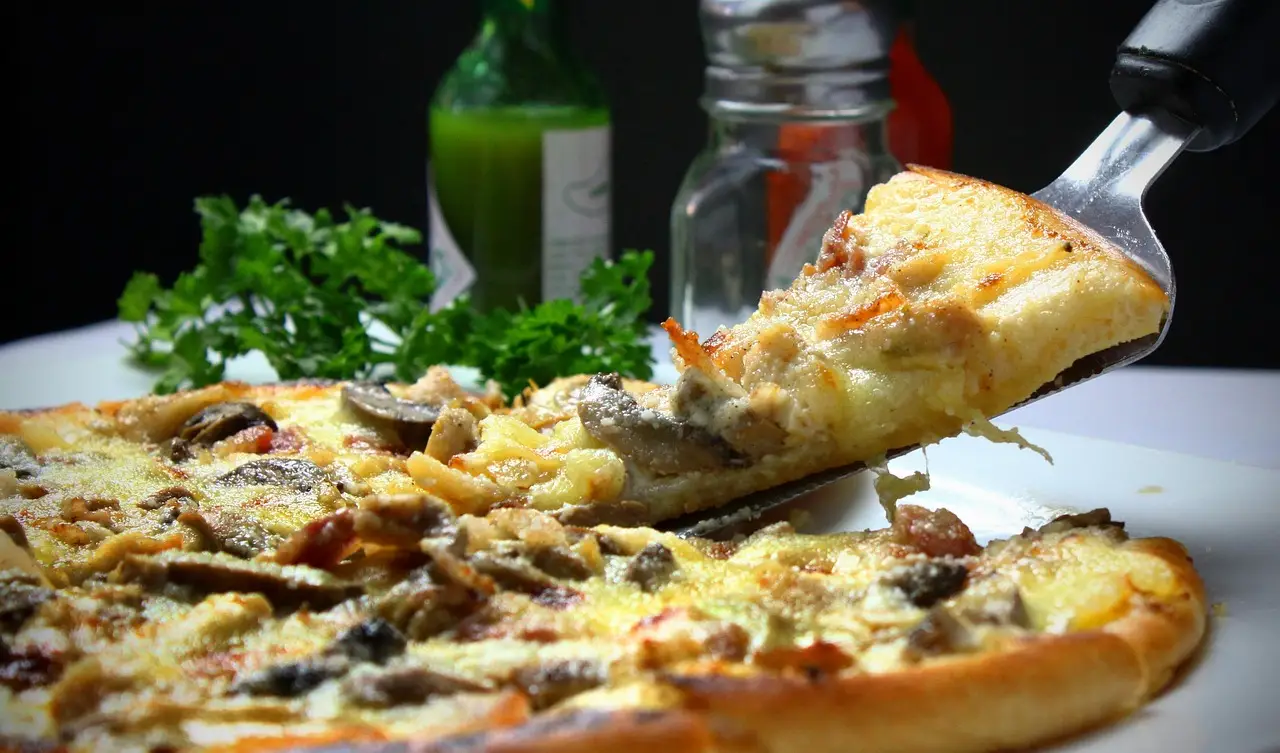
QSR pizza now holds 45% of the $37 billion U.S. pizza market, up 3.1 percentage points since 2019.
Spend per QSR pizza visit rose 41% versus 2019; at-home pizza totals about 31% of the market.
Mountain Dew Baja Blast, co-created by Taco Bell and PepsiCo, has grown into a $1 billion brand.
PepsiCo will stay Taco Bell's beverage partner for another 11 years, covering the U.S., Canada, Thailand, Ireland and the United Kingdom through 2036. The renewal lands about a week after KFC — Taco Bell's sibling chain under Yum Brands — announced it is dropping Pepsi for Coca-Cola after a 40-year run, a split that makes the Taco Bell commitment a notable retention win for PepsiCo in fountain beverage distribution.
The two companies have partnered for more than 20 years, and that history has produced measurable volume. Mountain Dew Baja Blast, co-created for Taco Bell, has grown into a $1 billion brand. Doritos Locos Tacos, another joint product, became one of the chain's signature menu items. In plain terms: this is a supplier relationship that has already converted co-development into billion-dollar retail-equivalent demand.
What is the renewal actually targeting?
The stated focus is Gen Z. The companies said they will concentrate on "crafted, functional, and energy beverages, as well as developing products aligned to new morning and afternoon occasions." That language signals two margin levers distributors and suppliers will recognize: premium-adjacent beverage categories, which carry better unit economics than core carbonated soft drinks, and daypart expansion, which spreads fixed labor and real estate costs across more transactions.
The takeaway: PepsiCo locked in a multi-market, multi-year fountain deal right after losing KFC, and Gen Z-oriented functional drinks are the growth thesis.
Where does drive-thru AI go from here?
Bojangles is scaling its drive-thru AI order taker, Bo-Linda, across its entire 890-plus-unit system in an extended partnership with Hi Auto. The multiyear expansion follows a test that began in 2024 and has already reached nearly 500 locations. More than 100 additional restaurants are expected to come online by mid-2027.
The disclosed throughput numbers are the ones to watch. The companies said Bo-Linda processes more than 1 million orders a week with a 98% success rate. For a system of roughly 890 units, that implies an average of well over 1,000 AI-handled orders per restaurant weekly — a figure worth interrogating against order mix, since drive-thru-heavy dayparts concentrate volume. Still, a 98% success rate at 1 million weekly orders is among the more concrete operational disclosures in the QSR AI space.
Context matters here. Burger King and Taco Bell are slowing their own drive-thru AI rollouts, and Technomic data finds that nearly half of consumers find AI drive-thru technology unappealing. Bojangles is moving against that current — betting that measured performance at scale outweighs consumer sentiment data. If the 2027 rollout holds, Bojangles becomes one of the largest fully deployed AI ordering systems in U.S. QSR.
The takeaway: while larger chains pause, an 890-unit regional operator is betting on a full-system rollout backed by a 98% success rate.
Did QSR pizza finally catch a break?
The pizza segment may have gotten a much-needed win after a string of negative sales and hundreds of location closures. New data from Numerator shows QSR pizza has taken share from at-home pizza in a $37 billion total pizza market.
The numbers break down like this:
- QSR pizza now accounts for 45% of total pizza spending — a 3.1 percentage-point increase versus 2019.
- Spend per restaurant visit is up 41% over that same period.
- At-home pizza totals less than $11.5 billion: $7.4 billion through the grocery channel and $4.2 billion at mass retailers, or about 31% of the market.
Read that shift carefully. A 41% increase in spend per visit outpaces the share gain, which suggests the channel is winning on ticket, not just traffic — diners are paying more per QSR pizza order even as they trade away from frozen and refrigerated grocery options. For grocery and mass-retail pizza suppliers, a three-point channel migration in six years is real volume moving out of the store and into the restaurant.
The takeaway: QSR pizza is taking measurable share of a $37 billion market, and higher per-visit spend is doing the heavy lifting.
What ties these three stories together?
All three moves land against the same backdrop: Technomic's Top 500 data shows chain restaurant sales slowed again in 2025 as consumers pulled back on dining, with coffee, beverages, snacks and chicken as the standout growth sectors. In a flat-to-down traffic environment, chains are chasing revenue through supplier partnerships, labor-substituting technology and ticket growth rather than unit expansion.
Expect PepsiCo and Taco Bell to push functional-beverage launches into new dayparts first, Bojangles to add its 100-plus AI units on the way to mid-2027, and QSR pizza operators to keep pressing the per-visit spend advantage as grocery pizza defends its $7.4 billion base.
via restaurantbusinessonline.com (Original)
More from Olivia Hart
Show full bio
Market editor covering companies, deals and strategy in Wholesale and distribution industry coverage for B2B professionals at Distribution Brief.
152 articles