Rockwell Automates a Food Bank: 200,000 Lbs of Greens a Year
Rockwell Automation's Clock Tower Farms is fully operational at its Milwaukee HQ: 72 Fork Farms hydroponic systems, 200,000 lbs of produce a year, feeding 600 partners across 35 Wisconsin counties.
- Scan date
- November 22, 2026
- Handle time
- 3 min
Packing list
Clock Tower Farms at Rockwell's Milwaukee HQ is fully operational, with 72 Fork Farms Flex Acre hydroponic systems.
Designed capacity is approximately 200,000 pounds of leafy greens and produce annually.
Output distributes through nearly 600 Feeding America hunger-relief partners serving 35 counties in Eastern Wisconsin.
Rockwell's PlantPAx control system auto-adjusts nutrients, pH and water; crop cycle is roughly three weeks from transplant to harvest.
Rockwell Automation has put 72 hydroponic growing systems into full production at its Milwaukee headquarters, with a target of roughly 200,000 pounds of leafy greens and other produce per year. The output will flow through Feeding America Eastern Wisconsin's network of nearly 600 hunger-relief partners serving 35 counties across Eastern Wisconsin.
The facility, called Clock Tower Farms, is fully operational and has begun regular food production and distribution, the company announced. It pairs Fork Farms' Flex Acre hydroponic systems with Rockwell's industrial control technology — the same category of automation the company sells to manufacturers — in a first-of-its-kind indoor farm located at the headquarters site.
For a distributor audience, the model is notable for what it removes from the chain: storage, delays and handling. Harvested greens go from the farm dock directly onto Feeding America Eastern Wisconsin's trucks, with no long-term storage in between.
How the production line works
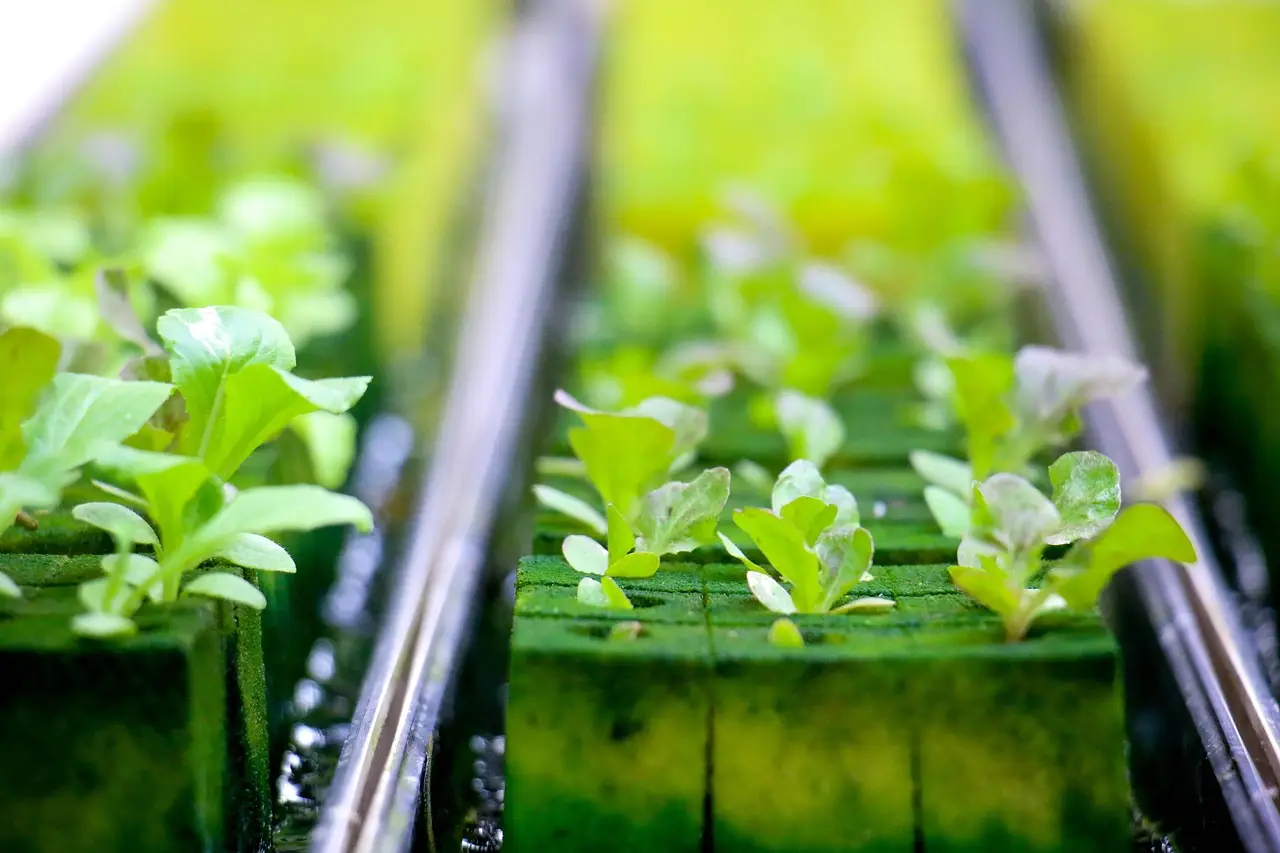
Clock Tower Farms runs a four-stage, year-round process built on controlled-environment agriculture (crop production in enclosed, managed conditions):
- Seed. Seeds germinate and develop into seedlings within approximately two weeks of planting.
- Grow. Seedlings move into Flex Acre systems, where nutrient-rich recirculating water feeds the roots and energy-efficient LED lights drive photosynthesis. Rockwell's PlantPAx control system monitors and automatically adjusts nutrients, pH and water levels based on the crop being grown.
- Harvest. After around three weeks, greens are cut and move straight to distribution.
- Impact. At maximum capacity, the 72 systems are designed to produce approximately 200,000 pounds of fresh produce annually.
What does this change for the food channel? It shortens the distance between harvest and distribution to essentially zero. Monique Kelley, President and CEO of Feeding America Eastern Wisconsin, said: "The ability to receive freshly harvested greens grown right here in Milwaukee helps us provide healthier food options to neighbors facing hunger while reducing the time and distance between harvest and distribution."
The automation angle
Rockwell is framing the project as a demonstration of its core technology applied outside the factory. Blake Moret, Chairman and CEO of Rockwell Automation, said: "Clock Tower Farms is a great example of how Rockwell Automation technologies can be used to help simplify complex challenges and create meaningful impact in our communities."
Moret added: "By combining Rockwell's automation expertise with Fork Farms' growing technology and Feeding America Eastern Wisconsin's distribution network, we're creating a scalable model that delivers fresh food where it's needed most and makes our community stronger."
That word "scalable" is asserted rather than measured — the 200,000-pound figure is a design capacity, not a reported harvest. The company disclosed no capital cost for the facility and no per-pound economics. The disclosed, verifiable facts are the system count, the capacity target, the crop cycle times and the distribution network it feeds.
Fork Farms, the Green Bay-based supplier of the Flex Acre units, sees the project as proof of its deployment thesis. Alex Tyink, CEO of Fork Farms, said: "We designed our technology to make fresh food production possible in places where it can have the greatest impact. Seeing Clock Tower Farms move from vision to operation demonstrates what's possible when organizations come together around a shared commitment to food access, sustainability, and community well-being."
Employee labor, community mission
Rockwell employees volunteered to build, clean and prep the growing systems and will continue supporting regular operations, the company said. The project is the latest entry in NAED's "The Good Stuff" series, which highlights community initiatives by association member companies and employees.
Clock Tower Farms was created to address food insecurity in Eastern Wisconsin while demonstrating how industrial automation and controlled-environment agriculture can support community needs, according to the announcement. The collaboration connects each harvest directly to the community it serves through the Feeding America network.
If the model proves out at capacity, the template — an automation vendor hosting production on-site and handing output to an established distribution network — could be replicated by other industrial companies with headquarters real estate and control-system expertise.
via tedmag.com (Source)
Filed underRockwell AutomationHydroponicsFood DistributionFood InsecurityControlled Environment Agriculture
More from Tom Whitfield
Show full bio
Staff writer covering companies, deals and strategy in Wholesale and distribution industry coverage for B2B professionals at Distribution Brief.
182 articles