Supply Chain & LogisticsTX-969D
Panama Canal Disruption Redirects Freight to Port of Los Angeles
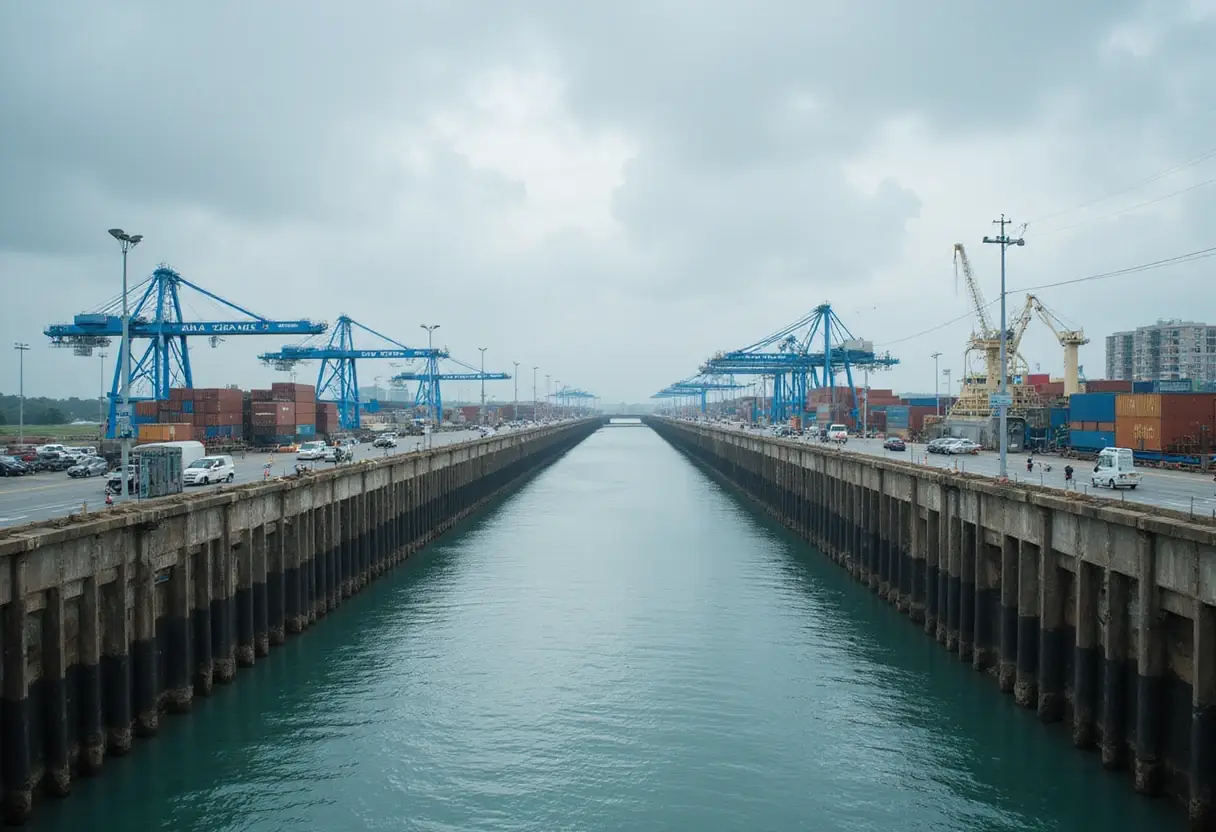
Panama Canal constraints and high fuel costs are pushing shippers and carriers to reroute volume to the Port of Los Angeles, reshaping landed costs and inventory timing.
- Scan date
- October 13, 2026
- Handle time
- 2 min
- Ticket
- TX-969D
Packing list
Panama Canal challenges are driving shippers and carriers to shift volume to the Port of Los Angeles.
High fuel costs are a second driver, penalizing longer transit times on alternative routings.
The shift concentrates freight at the San Pedro Bay port complex in Southern California.
The report does not quantify the volume shift, so the magnitude is asserted, not yet measured.
Panama Canal constraints are pushing shippers and carriers to reroute volume through the Port of Los Angeles, as high fuel costs compound the economics of longer transit times on alternative paths.
The shift lands squarely in the San Pedro Bay port complex, where Los Angeles sits alongside its neighboring terminals. For distributors, the routing change matters beyond port selection: it resets landed cost assumptions, inventory arrival windows, and the replenishment cadence that wholesale operations build their service levels on.
Why is freight moving to San Pedro Bay?
Two forces are working together, according to the report. First, the Panama Canal is operating under constraints that make the route less dependable for scheduled volume. Second, fuel costs are high enough that longer transit times — the practical alternative when canal capacity tightens — carry a direct penalty in carrier operating cost.
The combined effect: shippers and carriers are choosing the Port of Los Angeles to avoid stretched transit times and the fuel bill that comes with them.
In plain terms, the canal's problems plus expensive fuel make Los Angeles the cheaper, faster door for a growing slice of freight.
What does this mean for distribution economics?
When a routing shifts from a Gulf or East Coast gateway to Southern California, downstream costs move with it. Inbound freight to distribution centers in the central and eastern U.S. lengthens, drayage (short-haul trucking from port to warehouse) demand concentrates around San Pedro Bay, and warehouse slotting near the port tightens as volume arrives in larger, less evenly spaced waves.
Each of those variables hits gross margin on imported goods. Longer inland hauls raise per-unit freight cost. Uneven arrivals weaken inventory turns (how many times stock sells through per year), because safety stock has to absorb the variability. Distributors that planned replenishment around canal-route transit windows now need to reprice freight and recheck reorder points.
The report identifies the drivers — canal challenges and fuel costs — but does not quantify the volume shift, so the size of the migration remains an assertion until port statistics confirm it.
Simply put: the direction of the shift is clear; its magnitude is not yet measured.
What should distributors watch next?
The practical markers are monthly container counts and loaded-arrival data from the Port of Los Angeles, which will show whether the diversion is a blip or a persistent rerouting. Carrier schedule reliability through the canal, and any relief in fuel prices, would ease the pressure in the other direction.
Until then, distributors sourcing through canal-dependent lanes should treat Los Angeles routing as a live scenario in freight budgets — and watch San Pedro Bay volumes for confirmation that the shift is sticking.
via imgproxy.divecdn.com (Original)
More from Olivia Hart
Show full bio
Market editor covering companies, deals and strategy in Wholesale and distribution industry coverage for B2B professionals at Distribution Brief.
137 articles