Wholesale ChannelsTX-0BA3
Blackburn Cash and Carry Seeks to Raze Warehouses for Expansion
A Blackburn cash-and-carry business wants to demolish its warehouses and expand — a demolition-first bet that throughput, not floor area, is the binding constraint.
- Scan date
- September 28, 2026
- Handle time
- 3 min
- Ticket
- TX-0BA3
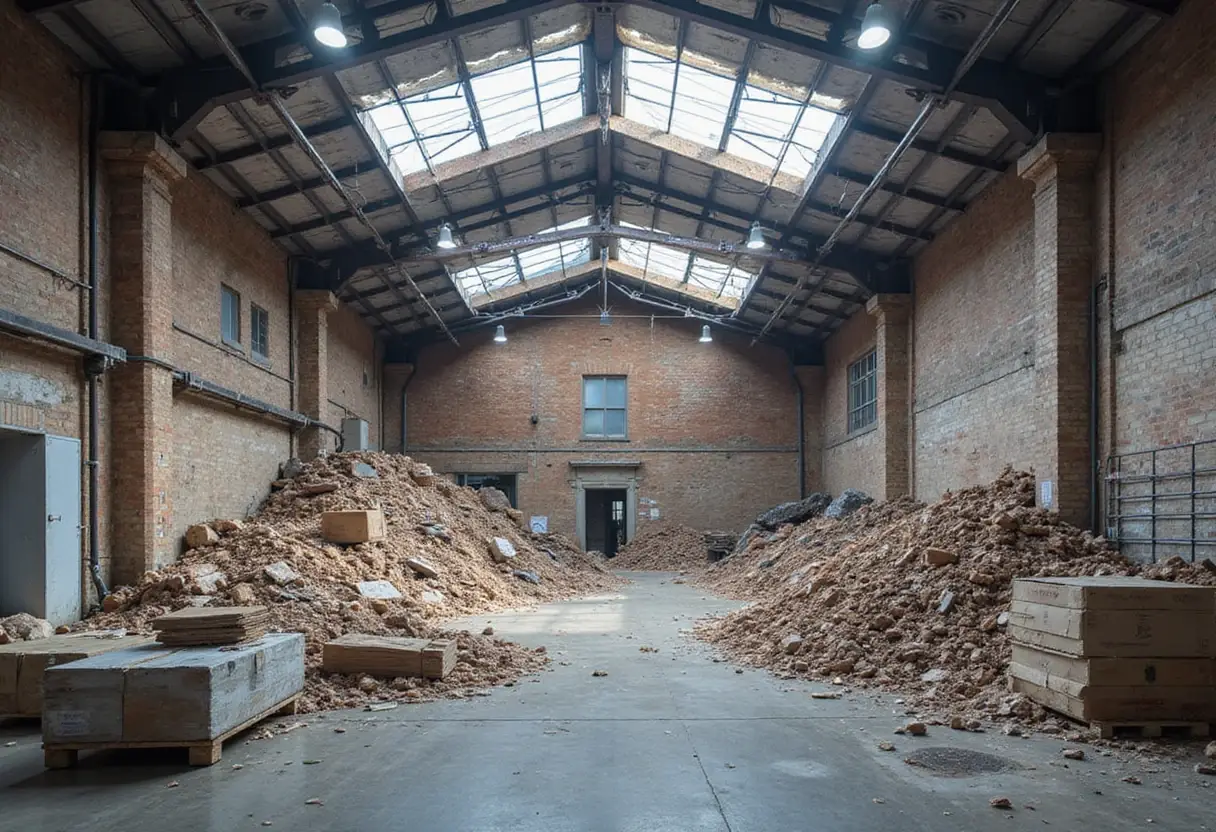
Packing list
A cash-and-carry business in Blackburn has put forward plans to demolish its existing warehouses and expand its operation
The report discloses no floor areas, capital cost or construction timeline for the scheme
The expansion requires local planning consent before any demolition can begin
A cash-and-carry business in Blackburn wants to demolish its warehouses and expand, Lancashire Telegraph reports. The plan, at headline level, commits to nothing beyond intent: no floor areas, no capital cost, no construction timeline appear in the disclosure. That absence matters. In a channel where throughput per square foot decides whether a depot earns its keep, the scale of the rebuild is the number that separates an investment case from a press line.
Cash and carry is the self-service end of food and general wholesale. Trade customers — independent grocers, convenience stores, caterers, small hospitality operators — walk the aisles themselves, pick in bulk, pay on the spot, and load their own vehicles. The operator runs on thin gross margins and high stock turns, and the building is the machine that produces both. Racking capacity sets how much inventory the depot can carry. Aisle width and circulation set how fast a buyer fills a trolley and a van. Loading bays and parking set how many customers the site cycles in a trading day. When any of those run tight, the constraint shows up as slower customer cycles and smaller baskets long before it shows up as a line in the accounts.
That is why a demolition-first plan reads as a throughput decision, not a real-estate one. An operator that extends sideways adds floor area but keeps the existing layout's friction. An operator that clears existing sheds can reconfigure the whole site around modern cash-and-carry economics: higher storage, wider pick routes, faster vehicle turnaround, more parking. The Blackburn business has chosen the second path, which implies its current warehouses no longer fit the trading format it runs.
The choice carries risk. Demolition removes trading capacity before replacement capacity exists, and the report does not say whether the business intends to phase the works, trade from temporary space, or absorb the disruption. Wholesale margins are too thin to carry idle land comfortably. Until the application documents surface, the phasing question stays open.
The plan must clear the local planning process before demolition can start. That is the point at which the numbers the headline omits — gross floor area, parking provision, servicing arrangements, construction programme — become public and testable. Planning filings for distribution sites typically state exactly what will be built, where the vehicles will queue, and how the scheme affects neighbours' traffic and noise. Those documents will convert the expansion claim from assertion into measurable commitment.
The channel context sharpens the bet. Cash and carry competes with delivered wholesale for the same independent customer base, and wins where a buyer values speed and flexibility over scheduled drops and minimum order values. It competes, indirectly, with retail consolidation, which shrinks the pool of independent stores that form the depot's customer base. An operator adding physical capacity is betting that walk-in trade picking in Blackburn remains the cheaper, faster option for small businesses that need stock today and cannot wait for a delivery round. Capacity is that bet made concrete.
What the report establishes is intent. What it does not establish is scale, cost, funding or timing. Treat the expansion claim accordingly: the demolition-and-rebuild is a real signal about how the operator sees its constraints, and an unpriced one until the planning file opens.
If the scheme clears planning, the rebuild will test whether demand from Blackburn's independent retail and catering trade supports a bigger depot; if it stalls, the business keeps trading inside walls it has already outgrown.
via Google News: Cash and carry (Source)
More from Olivia Hart
Show full bio
Market editor covering companies, deals and strategy in Wholesale and distribution industry coverage for B2B professionals at Distribution Brief.
137 articles