Asics uses Corvus drones to cut inventory search time at Byhalia
Asics says autonomous drones at its 855,000-square-foot Byhalia distribution center recover misplaced inventory 60% faster, cut 200 labor hours and support monthly counts.
- Scan date
- November 17, 2026
- Handle time
- 5 min
Packing list
Asics reports that Corvus drones recover misplaced inventory 60% faster at its Byhalia, Mississippi, distribution center.
In one three-month period, drones identified 26 misplaced cases containing more than 200 pairs of shoes.
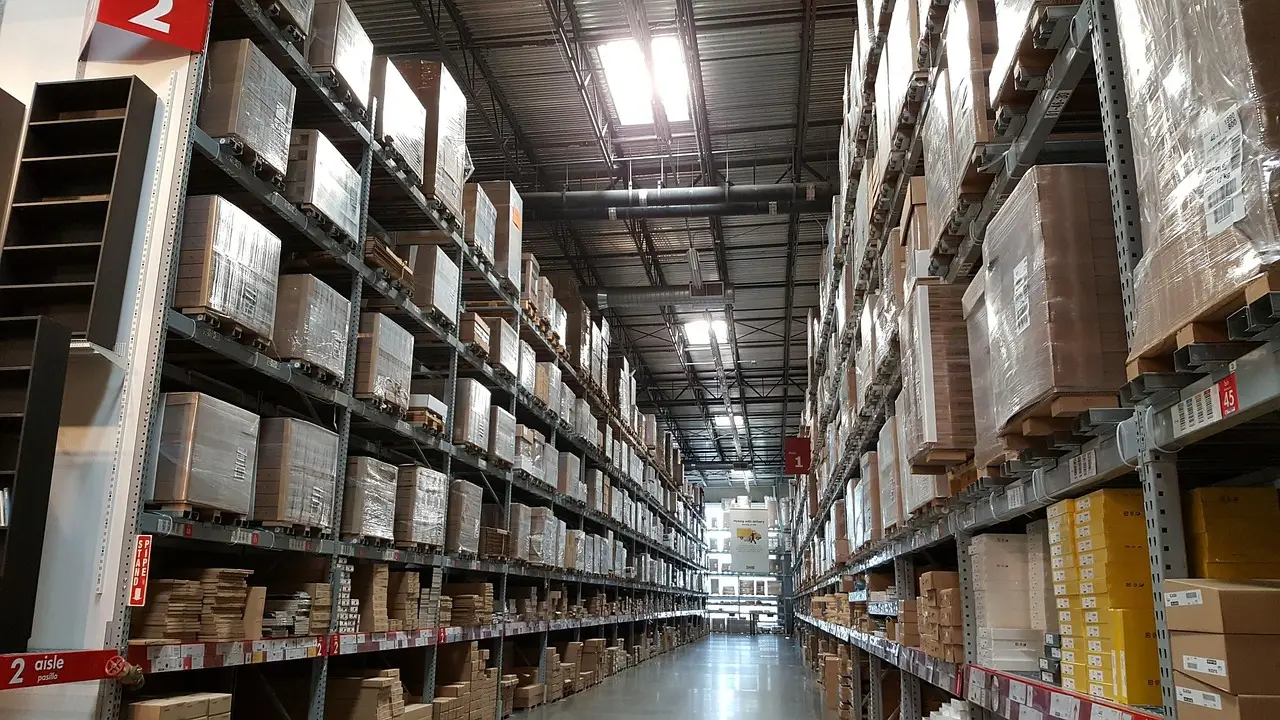
The 855,000-square-foot center stores nearly 3 million units across roughly 44,000 SKUs.
Monthly drone-supported counts replaced twice-yearly manual counts in the singles and case-reserve areas.
Asics reports 200 labor hours saved and says it can now list all SKUs after previously withholding up to 15 of every 100 products.
Asics reports that autonomous warehouse drones developed by Corvus Robotics recover misplaced inventory 60% faster than before deployment at its 855,000-square-foot omnichannel distribution center in Byhalia, Mississippi. The company disclosed the results in a Nov. 10 release, which also cited 200 labor hours saved and a shift from twice-yearly to monthly counts in two critical areas.
What does the Byhalia deployment change for Asics and its customers?
The footwear and apparel retailer’s facility stores nearly 3 million units across roughly 44,000 SKUs and serves e-commerce, wholesale and retail-store orders. Manhattan Associates’ warehouse management system (WMS), which coordinates inventory and fulfillment work, runs the site.
The singles area holds single pairs and returned products, while case reserve space contains full cases of multiple pairs. Before deployment, Asics counted manually twice a year; drones now support monthly counts in those two sections.
During one three-month period, the drones identified 26 misplaced cases containing more than 200 pairs of shoes. They make seven flights each night, starting around 7 p.m., scanning both areas for universal product codes (UPCs) and counting boxes.
Asics uses both scans because new and returned products can share a SKU in some locations. Koestler said in a Corvus case study that the process requires item-level logic: if 10 boxes are present, each should have its own UPC.
Kyle Koestler, senior director of distribution and transportation at Asics America, said: “If a unit went missing, we might not find it for six months. That could be the last pair in the building for an order we’ve already taken, and then the customer gets a cancellation.”
Koestler said monthly cycle counts through Corvus One, a system designed to surface errors sooner, help Asics deliver orders on time. He described the old process as a recurring “fire drill” that forced staff to search for missing goods, arguing fewer incidents leave the company better off.
Morning verification remains manual. Inventory associates review every flight path using video and images captured overnight, checking for misreads before adjusting records. The process lets staff resolve some discrepancies without sending an associate into the building, while drones traverse aisles often less than 6 feet wide.
Angela Williford, inventory control operations manager at Asics America, said the footage showed staff “exactly what’s going on with it in the locations” before dispatching someone into the warehouse. She added that staff could correct from the desk any issue that did not require a physical check.
Asics attributed the 200-hour reduction partly to drones navigating narrow aisles more efficiently, even with the morning review retained. The release did not provide wage rates, drone costs or implementation costs, so it cannot establish labor savings in dollars or whether those savings repay the investment.
The reported operating results cover search speed, count cadence and labor hours. Asics says better visibility allows it to list all SKUs on online marketplaces and avoid selling non-listed items at a discount.
Before deployment, the company withheld up to 15 of every 100 products because fulfillment risk at the tail of the inventory chain made availability uncertain. That constraint reduced marketplace assortment and could force inventory into lower-priced releases.
The change could protect gross margin by reducing markdowns and give Asics tighter control over product allocation across e-commerce, wholesale and stores. It could also support inventory turns, a measure of how often inventory is sold and replenished over a period, by making scarce pairs findable sooner.
However, Asics disclosed no inventory-turn rate, cancellation rate, order fill rate—the share of orders shipped complete—or gross-margin improvement. It also provided no marketplace transaction volume or data showing how quickly listed inventory sells. Those omissions prevent a test of whether full listings improved customer economics or Asics’ channel power, its control over product availability and allocation.
Any economic case must therefore rest on whether availability gains outweigh operating and capital costs. The release answers only the operational portion of that case.
Other warehouse deployments show the technology extending across distribution verticals, although the release gives no comparable operating metrics for them. Corvus Robotics lists alcohol distributor Southern Glazer’s Wine & Spirits and skincare brand Dermalogica as clients.
Sportswear brand On partnered robotics manufacturer Verity in 2024 to deploy drones inside a fulfillment center for inventory visibility. On planned to extend the rollout across its facility network.
For Asics, the immediate channel-power shift is operational rather than evidence of greater negotiating leverage. More reliable inventory records can reduce emergency searches, late order cancellations and discounted releases across its three order channels.
For customers, the claimed benefit is fewer cancellations and more dependable order completion; the release disclosed no change in order value or customer retention. Monthly checks can make discrepancies visible before they affect an order, while clearer records should reduce the need for Asics to withhold availability on marketplaces.
The operational case rests on 60% faster recovery, monthly counting and 200 labor hours saved. None of those measures establishes whether the broader marketplace assortment or lower manual-search burden has enough value to offset the system’s cost.
The disclosed deployment is at one Mississippi site, and the release does not say whether Corvus One will expand to other distribution centers or additional processes at Byhalia. The deployment data establish a site-level result, not a network-wide standard.
The next evidence to watch is whether the 60% faster recovery rate and 200-hour saving persist across more inventory zones, whether monthly counting reduces cancellations, and whether full marketplace listings translate into measurable volume without further markdowns.
via Supply Chain Dive (Source)
More from Tom Whitfield
Show full bio
Staff writer covering companies, deals and strategy in Wholesale and distribution industry coverage for B2B professionals at Distribution Brief.
182 articles