Supply Chain & LogisticsTX-12AB
Amazon Adds LTL Labels, Regional Rates for Bulky Sellers
Amazon brings negotiated LTL labels, regional delivery pricing, and white-glove Seller Flex to heavy-and-bulky merchants, citing a 2.5x sales lift among program users.
- Scan date
- October 9, 2026
- Handle time
- 4 min
- Ticket
- TX-12AB
Packing list
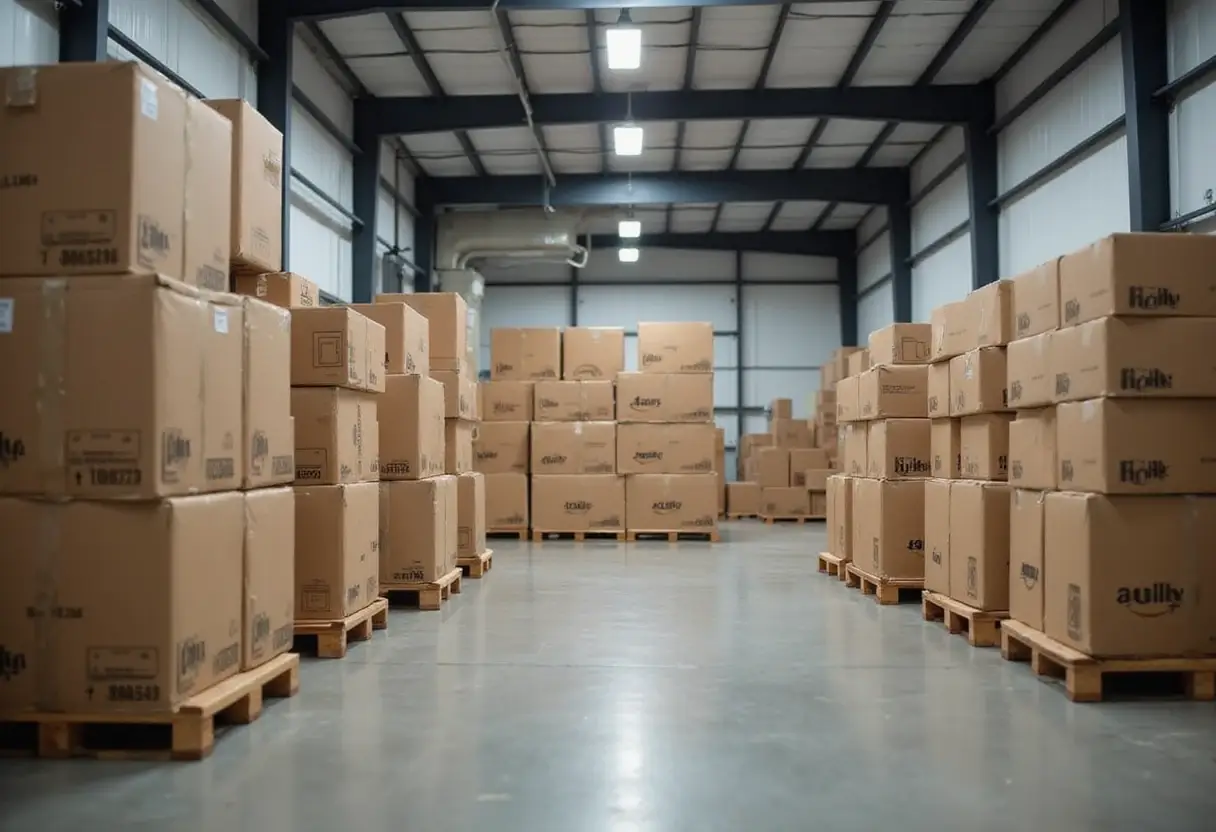
Amazon Buy Shipping will offer negotiated LTL labels starting October 2026.
Regional delivery pricing for heavy and bulky items is scheduled for early 2027.
Sellers enrolled in Amazon's bulky-fulfillment program generate more than 2.5 times the sales of self-shippers, per Amazon VP Ripley MacDonald.
Local-carrier matching will extend same- or next-day delivery within 100 miles of a seller's warehouse.
Costco (2024), Wayfair (2025), and Home Depot (2026) all expanded bulky-delivery capabilities during the same window.
Sellers in Amazon's bulky-fulfillment program post 2.5x the sales of self-shippers, VP says
Merchants using Amazon's heavy-and-bulky fulfillment service generate more than 2.5 times the sales of sellers handling those orders on their own, Ripley MacDonald, VP of product and software development at Amazon Supply Chain Services, told attendees at the Amazon Accelerate 2026 conference last week. The company frames bulky goods as one of its "fastest-growing merchant categories."
The 2.5x figure is Amazon-supplied, not independently audited, and the comparison group — "sellers shipping heavy and bulky orders on their own" — is not defined in disclosed unit terms. What is measured is the stack of new logistics tools now being layered onto that category.
The four pieces:
- LTL labels inside Buy Shipping, launching in October 2026
- Regional delivery pricing for heavy and bulky items, slated for early 2027
- Local-carrier matching for same- or next-day delivery within 100 miles of a seller's warehouse
- Expansion of Amazon Seller Flex, an invite-only program, into heavy and bulky orders
What changes for sellers in October?
Starting next month, third-party merchants can purchase less-than-truckload labels through Amazon Buy Shipping, accessed via Seller Central and approved third-party shipping software. The pitch rests on two levers: Amazon's negotiated LTL rates, and a delivery-performance guarantee that shields merchants from late-shipment penalties.
"When you use LTL through Buy Shipping, you take advantage of Amazon's special negotiated rates and receive protection from late deliveries," MacDonald said. "That means lower label costs, with fewer disputes eating into your margins and account health."
For distribution economics, the move matters because heavy and bulky SKUs typically carry lower inventory turns and higher damage-and-claims exposure than small-parcel goods. Centralizing label procurement compresses carrier-selection work and consolidates the data trail that drives seller-account standing — both line items in the cost-to-serve.
What does regional delivery pricing unlock?
Beginning in early 2027, sellers will set shipping fees by region rather than one national rate. A merchant can undercut a warehouse in Ohio if the carrier market is denser, or absorb freight to match a competitor's free-shipping offer in selected zones.
"Instead of one flat rate everywhere, you can set fees by region. So you can offer free shipping when it makes sense," MacDonald said.
For distributors, zoned pricing on a marketplace with Amazon's delivery footprint tends to sharpen channel-power dynamics. Sellers with multiple warehouses gain a structural advantage, because regional rates can only be optimized when inventory sits close enough to the buyer.
How does Seller Flex extend into this category?
Amazon Seller Flex — historically a small-parcel program — will take on heavy and bulky orders. After a seller picks, packs, and releases the goods, Amazon takes responsibility for coordinated warehouse pickups, in-home delivery, placement, installation, customer service, and returns.
Customers see a specific delivery date at checkout rather than a window, MacDonald said. That certainty is the lever Amazon is pulling to convert bulky-goods shoppers, who often abandon carts when installation logistics look uncertain.
How are other retailers responding?
Bulky-goods delivery has become a parallel investment theme across major retail channels.
- Costco reported growth in 2024 for Costco Logistics, its big-and-bulky service spanning appliances and furniture.
- Wayfair expanded CastleGate in 2025 into a third-party logistics offering aimed at home-goods shippers.
- Home Depot launched real-time delivery tracking in 2026 for large items such as lumber and appliances, enabled through handheld devices carried by its drivers.
The competitive backdrop suggests Amazon's LTL and regional-pricing moves are calibrated less against UPS and FedEx than against these in-house retail-delivery programs, where the merchant-customer relationship lives outside Amazon's marketplace.
What does the rollout signal for margins?
Amazon did not disclose negotiated LTL rates, the size of the bulky-merchant cohort, or the average ticket size of items shipped through Seller Flex. What is measured is the structural change: one integrated stack — label procurement, regional pricing, local-carrier matching, and white-glove fulfillment — now aimed at heavy-goods sellers, a category where gross margins have historically been compressed by freight costs and claims exposure.
If regional pricing ships on schedule in early 2027 and LTL adoption tracks the Buy Shipping uptake Amazon has seen in small-parcel categories, expect Amazon's heavy-and-bulky segment to compress its margin gap with the core small-parcel business faster than the broader bulk-freight market.
via techtarget.com (Original)
More from Olivia Hart
Show full bio
Market editor covering companies, deals and strategy in Wholesale and distribution industry coverage for B2B professionals at Distribution Brief.
137 articles