Wholesale ChannelsTX-1121
WK Kellogg's Cereal Reset: Rhetoric Versus Channel Math
WK Kellogg Co executives promise a 'wake-up call' for a cereal aisle absorbing years of sales declines, leaving distributors to interrogate the plan against channel economics.
- Scan date
- October 13, 2026
- Handle time
- 4 min
- Ticket
- TX-1121
Packing list
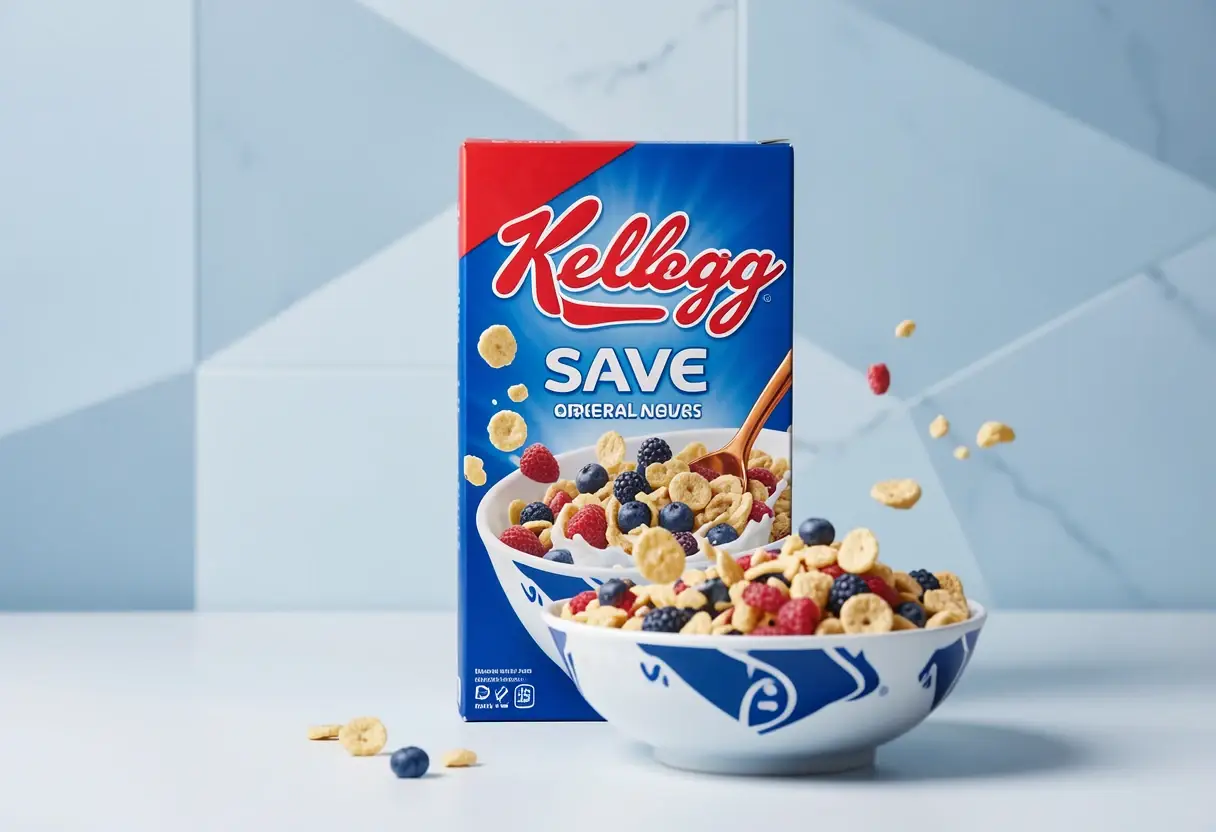
WK Kellogg Co manufactures Froot Loops and Frosted Flakes.
Cereal category has absorbed years of sales declines, according to executives.
Executives describe the response as a 'wake-up call' for the category.
Source discloses no revenue, volume, or brand-level share data.
Plan cites shifting consumer eating habits as the category headwind.
WK Kellogg Co, the manufacturer of Froot Loops and Frosted Flakes, opens its latest strategic turn from a position of structural weakness. The available reporting states plainly: the cereal category has absorbed years of sales declines against a shift in consumer eating habits. Executives have framed the response as a plan to give the category "a wake-up call."
The question for wholesalers, brokers, and grocery buyers is whether that promise rests on measurable economics, or on language designed to defend shelf space through another budget cycle. The source offers one concrete fact. Sales have declined for years. The shift toward alternative breakfast occasions is the stated cause. Everything else arrives as executive assertion.
What does "wake-up call" actually mean in distribution terms?
Distribution Brief readers should parse the phrase. Cereal sells as a center-store packaged good (stocked on standard shelving rather than refrigerated cases) predominantly through grocery, club, and mass channels (broad-line retail formats combining groceries with general merchandise). Its performance depends on three variables: household penetration (the share of households buying in a given period), purchase frequency, and price per ounce. When eating habits shift, penetration and frequency move first; price per ounce moves last and only when brands lose volume badly enough to trigger promotional spiral dynamics (the cycle in which discounting entrenches consumer expectations of lower shelf prices).
WK Kellogg owns brands with high household recognition. Froot Loops and Frosted Flakes are household names across the United States. Recognition alone does not generate turns (the number of times average inventory sells through and is replaced in a year). The category has been losing trips (household purchase occasions) for several years. No distributor can reverse that dynamic through slotting fees (manufacturer payments to secure shelf placement) alone.
What is not said matters here
The reporting contains no revenue figure, no volume disclosure, no brand-level share data, and no quotation attributed to a named executive. Distributors evaluating the plan therefore face an information deficit that executives themselves have not closed. Treat any category-resurrection narrative as a forecast rather than a measurement. Forecasts in packaged food frequently miss by double digits in either direction because cold-start expansion economics (the unit-economics threshold a brand must clear to grow profitably) in mature categories require capital that the company has not disclosed in this report.
How does eating-habit shift compress category economics?
The shift away from prepared cereal compresses the category at three levels. First, household penetration: fewer households stock a box at any given moment. Second, purchase frequency: households that remain in the category buy less per trip, often switching to multipack club formats that lower per-unit revenue for the brand. Third, channel mix: e-commerce and club continue to take share from traditional grocery, where margin structures differ. Each level reduces gross margin (the difference between revenue and the direct cost of goods sold, expressed as a percentage of revenue) when measured against fixed slotting and marketing overhead.
For the broker network, the consequence is straightforward. Promotional allowance (trade spending directed through wholesalers to fund retailer discounts and merchandising) rises as a percentage of net revenue when category volume falls. Brokers earn against that allowance. When allowance grows, headline numbers can look favorable even as the underlying business contracts. Watch that pattern closely.
What is at stake for wholesale and club?
The cereal category remains a volume anchor for center-store grocery, and that anchor matters even as it shrinks. Distributors carrying branded cereal generate turns that pay fixed warehouse costs. Removing or reducing the category would not save shelf space; it would force reallocation toward higher-velocity (faster-selling) but lower-margin fresh and frozen categories. The wholesale math favors retention of branded cereal at negotiated promotional terms, not exit.
Club retailers pose a separate question. Multipack and bulk configurations of Froot Loops and Frosted Flakes generate predictable turns at lower per-unit margin. The shift toward club purchasing is itself one of the eating-habit signals the company cites. Cereal inside a club pack competes with protein bars, shelf-stable breakfast biscuits, and yogurt multipacks placed in adjacent aisles, not only with other cereal.
Will the plan translate to channel economics?
That is the open question. The source describes a plan without specifying mechanism. Distribution Brief will watch for three disclosures: a measured baseline for category volume, a stated promotional allowance as a percentage of net revenue, and a named executive accountable for execution. Absent those, the wake-up call functions as marketing language. Channel partners negotiate against marketing language every cycle. They know the difference.
via Food Dive (Source)
More from James Calloway
Show full bio
Senior reporter covering regulation, policy and their impact on Wholesale and distribution industry coverage for B2B professionals at Distribution Brief.
138 articles