Wholesale ChannelsTX-2AAD
Wholesale Trade Trails Nearly Every Industry in Canadian AI Adoption
Wholesale trade ranks near the bottom of Canadian industries in AI adoption, according to a new analysis — a lag with direct consequences for margins, inventory turns and channel competitiveness.
- Scan date
- September 30, 2026
- Handle time
- 3 min
- Ticket
- TX-2AAD
Packing list
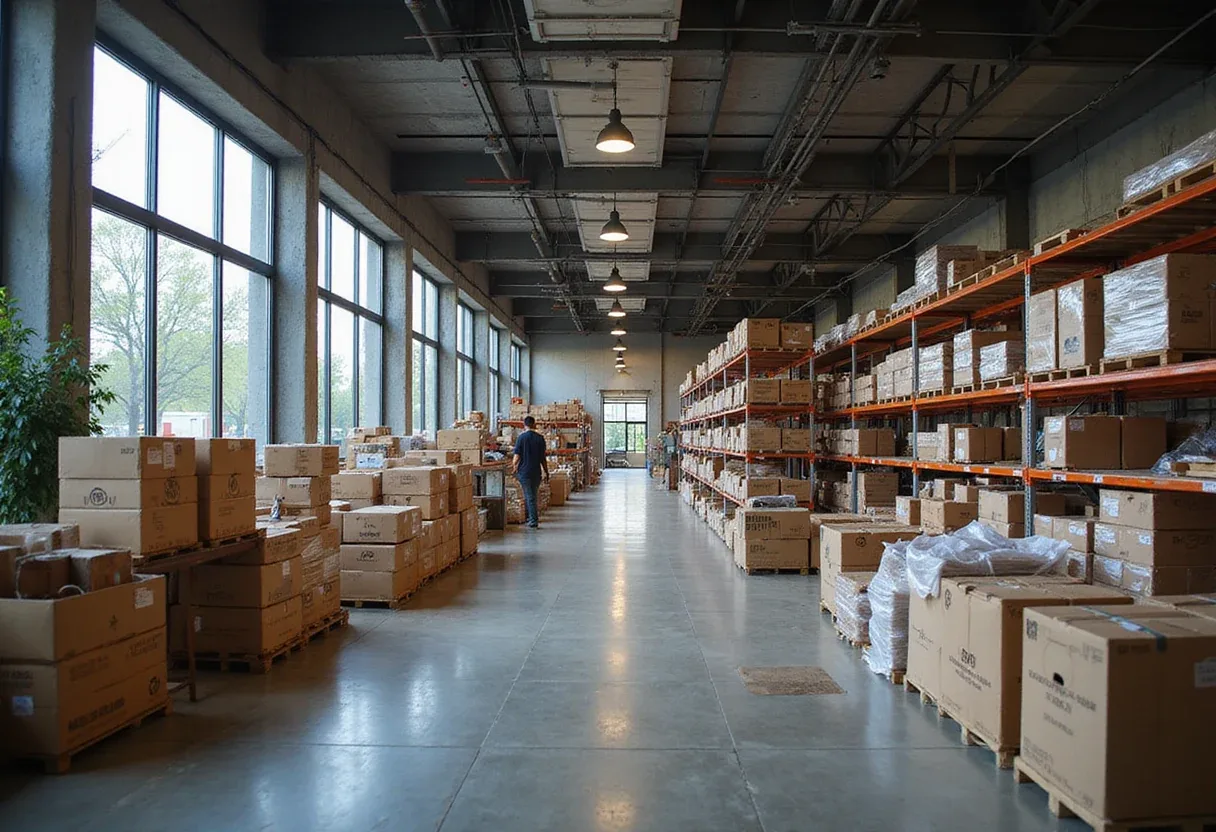
Wholesale trade trails nearly every other Canadian industry in artificial intelligence adoption, per distributionstrategy.com
The report asserts a relative ranking but discloses no absolute investment figures, survey base or adoption definitions
The adoption gap carries direct implications for distributor gross margin, inventory turns and cost-to-serve against faster-adopting competitors
Wholesale trade ranks near the bottom of Canadian industries in artificial intelligence adoption, according to a new analysis published by distributionstrategy.com. The finding lands at a moment when distributors across North America face mounting pressure to deploy AI in pricing, demand forecasting and inventory management — the operational levers that determine gross margin and inventory turns.
The headline claim is stark: wholesale trade trails nearly every other sector in Canada in AI uptake. That places distribution behind sectors that have moved faster on machine learning and automation, even as the technology has become cheaper to access through cloud platforms and third-party tools aimed squarely at mid-market distributors.
The lag matters for channel economics. AI adoption in distribution typically targets the highest-cost frictions in the wholesale model: forecast error that inflates safety stock, manual pricing that leaves margin on the table, and order processing that ties up labor. Distributors that deploy these tools can compress carrying costs and improve inventory turns — advantages that compound as suppliers and customers reward the most efficient intermediaries with volume. A sector-wide adoption gap therefore translates into a sector-wide competitiveness gap against both faster-adopting industries and larger distributors with the capital to move first.
Canada is not a marginal market for this question. The country's wholesale trade sector is a critical conduit for goods moving between manufacturers and retailers, and its digitization pace shapes how quickly downstream customers gain access to real-time inventory visibility, dynamic pricing and faster fulfillment. If Canadian wholesalers adopt AI more slowly than their counterparts in finance, professional services or information and cultural industries — sectors that have historically led Canadian AI adoption — the gap shows up in service levels and cost-to-serve, not just in technology dashboards.
The report itself, as summarized in its headline, makes an adoption claim rather than disclosing measured deployment volumes. Readers should treat it accordingly: it signals relative position across industries, not the absolute size of AI investment in wholesale, the number of distributors using specific tools, or the margin impact of those deployments. What is asserted is the ranking; what remains undisclosed is the underlying survey base, the definition of "adoption" used, and the time period covered. Those details determine whether the lag reflects genuine organizational inertia or simply a narrower definition of AI use in distribution compared with data-heavy sectors.
Still, the directional signal is consistent with patterns observers have noted elsewhere in the wholesale channel. Distribution remains a relationship-driven business with fragmented IT estates, heavy reliance on legacy ERP systems and thin margins that constrain discretionary technology spend. Mid-sized wholesalers in particular often lack the data infrastructure — clean product masters, integrated supplier feeds — that modern AI applications require before they can deliver measurable returns. The adoption gap may therefore be as much a data-readiness gap as a willingness gap.
The commercial stakes are asymmetric. Distributors that close the gap early can convert AI-driven forecasting and pricing into gross margin expansion at the expense of slower rivals, because wholesale markets reward the intermediary that holds the least inventory while maintaining fill rates. Those that delay face the reverse: margin compression from competitors quoting sharper prices on better demand signals.
For suppliers and manufacturer partners, a slow-adopting wholesale channel also constrains their own ambitions for channel-wide data sharing, vendor-managed inventory and predictive replenishment programs.
The distributionstrategy.com analysis does not forecast when Canadian wholesale trade might close the gap, and it provides no disclosed benchmarks for tracking progress. But the finding itself sets a baseline: the next round of Canadian AI adoption data will show whether wholesale trade begins to climb the rankings or continues to trail the industries it supplies.
via Google News: Wholesale distribution (Source)
More from Amara Osei
Show full bio
News editor covering technology and product news in Wholesale and distribution industry coverage for B2B professionals at Distribution Brief.
143 articles