Industrial & MRO SupplyTX-1EB3
Pump Manufacturer Pulls Oregon Headquarters to West Texas
An Oregon pump manufacturer has moved its headquarters to West Texas, Industrial Distribution reports. The source did not name the company or disclose the headcount. The signal still reads clearly.
- Scan date
- October 15, 2026
- Handle time
- 3 min
- Ticket
- TX-1EB3
Packing list
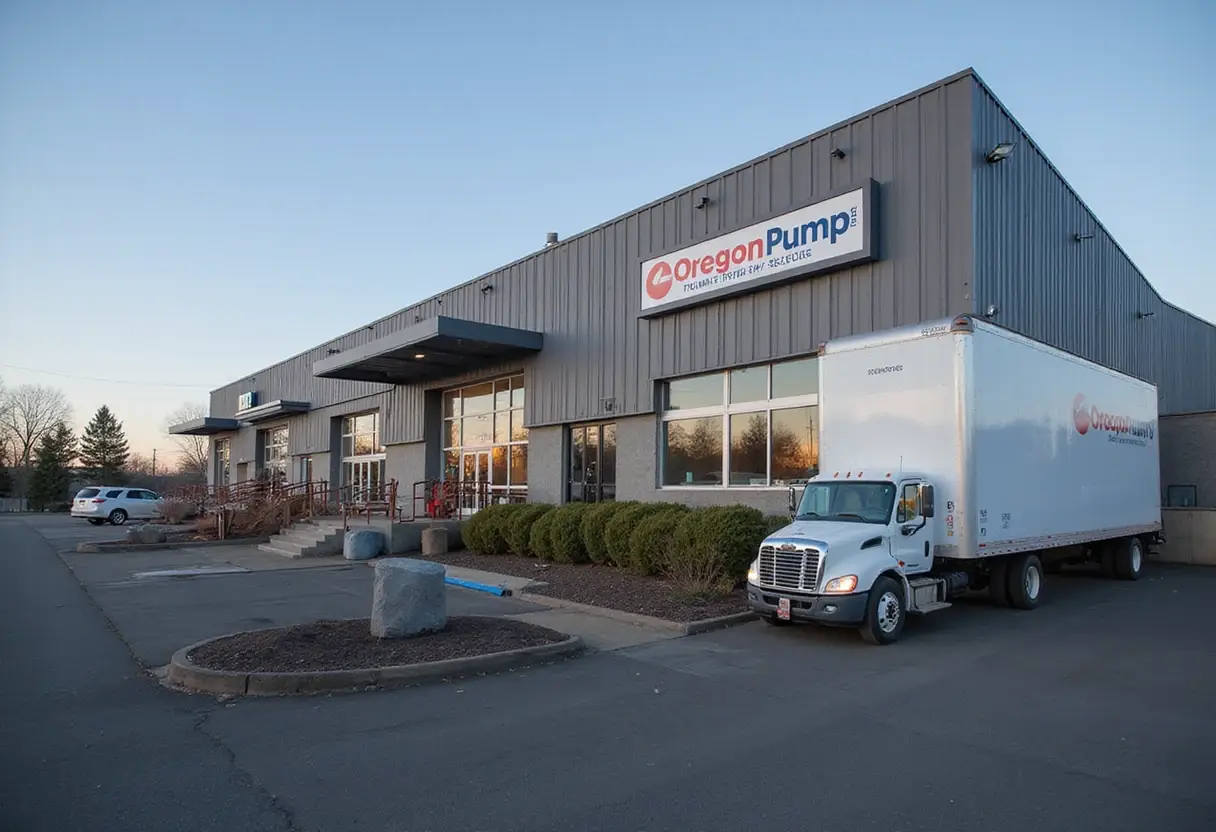
An Oregon-based pump manufacturer has relocated its corporate headquarters to West Texas.
Industrial Distribution reported the relocation.
The source did not name the company, identify either city, or disclose headcount or financial terms.
A West Texas headquarters places the OEM inside a tank-truck radius of the Permian Basin, the largest U.S. shale play.
Pump gross margins in oilfield applications run meaningfully higher than in municipal water, per industry convention.
An Oregon-based pump manufacturer has relocated its corporate headquarters to West Texas, Industrial Distribution reported this week.
The source did not name the company, identify either city, or disclose headcount or financial terms. What it confirms is a directional shift inside U.S. industrial supply — and one that distributors should read carefully.
What does the move tell us about pump demand?
Pump makers serve oil and gas, water utilities, mining, agriculture, and general industrial process work. A move from Oregon to West Texas puts the executive suite inside a tank-truck radius of the Permian Basin.
Down there, pump demand tracks rig counts, produced-water volumes, and frac spreads. Distribution economics follow the same pull. Warehouses, sales engineers, and service technicians cluster near the wells they serve because downtime is measured in barrels per hour, not calendar days.
The trade reads a West Texas headquarters as a vote for energy-adjacent demand. That bet matters because pump gross margins in oilfield applications run meaningfully higher than in municipal water — spec cycles compress and replacement parts carry premium pricing during drilling booms.
A headquarters shift to where those buyers sit is, in plain terms, a margin-management decision disguised as a real estate one.
Why move at all?
Cost is the usual first answer. Texas levies no state income tax. Industrial land costs a fraction of Pacific Northwest pricing.
Power reliability has become a procurement variable in its own right after a decade of grid stress across the western U.S. None of those are minor.
But cost alone rarely drives a headquarters move. What matters for the channel is proximity — to upstream decision-makers, to the engineering firms that spec pumps into wellsite packages, and to the service contractors that stock replacement inventory.
That proximity shortens the sales cycle in categories where spec-in happens at the wellsite, not at the corporate office.
What changes for distributors on the ground?
- Stocking. A pump OEM headquartered closer to the Permian will think differently about finished-goods inventory than one based in Portland. Expect shorter lead-time commitments to Permian distributors, and slower turnaround for accounts the old geography served.
- Service network. Field repair is the flat-margin corner of the pump business. A relocation typically pulls some technician headcount with it, leaving service gaps that third-party repair shops fill.
- Channel power. Distributors carrying the OEM's line for West Coast municipal water work may face disintermediation as regional sales leadership consolidates in the southern plains.
None of those shifts are guaranteed. The disclosure is too thin to confirm any of them. But the directional pressure is consistent with how pump distribution has reorganized since the shale build-out accelerated in the mid-2010s.
What doesn't the source tell us?
Plenty. No executive commentary was published alongside the report. No severance figures, no relocation package, and — critically — no confirmation of whether manufacturing stayed in Oregon or followed the headquarters.
The latter matters for distributor margin. An OEM that still builds product on the West Coast while selling from Texas adds a freight leg that independent distributors will price into every quote.
Distributors on the West Coast should also watch for whether the OEM consolidates its regional sales engineers into the Texas office. A thinner rep presence in the Pacific Northwest typically hands share to independents carrying competing lines.
The Permian's pull on pump makers has been visible for years. This relocation is one more data point in a pattern, not a one-off headline. Distribution Brief will update when the company, the cities, and the headcount surface in a filing or a release.
via Google News: Industrial distribution (Source)
More from Priya Raman
Show full bio
Correspondent covering technology and product news in Wholesale and distribution industry coverage for B2B professionals at Distribution Brief.
125 articles