OTAA Cuts US Fulfillment Costs in Half by Shifting Stock to Texas
OTAA says orders shipped from Cart.com's Longview, Texas site cost roughly half as much as those sent from Melbourne, after the end of the de minimis exemption.
- Scan date
- November 17, 2026
- Handle time
- 3 min
Packing list
Texas-fulfilled orders cost OTAA roughly half as much to fulfill and deliver as Melbourne-shipped orders, per a Nov. 4 release.
The U.S. accounts for about half of OTAA's business; shipping from Longview, Texas began in February.
The Longview site stocks about 1,750 styles — one-fifth of OTAA's catalog — with ~1,000 more styles planned by year-end.
Trump eliminated the $800 de minimis exemption last year; Lululemon expected a $240 million profit hit from higher duties and its end.
Aritzia said one-third of its headwinds stemmed from de minimis elimination.
An order shipped from Texas costs Australian menswear brand OTAA roughly half as much to fulfill and deliver as one sent from Melbourne — the sharpest number yet in the post-de minimis scramble to relocate inventory inside the United States.
OTAA, based in Melbourne, tapped Cart.com for U.S. fulfillment after President Donald Trump eliminated the de minimis exemption last year, according to a Nov. 4 press release. The exemption had allowed imports valued under $800 to enter the U.S. duty- and tax-free, a tool e-commerce merchants used to ship goods into the American market cheaply.
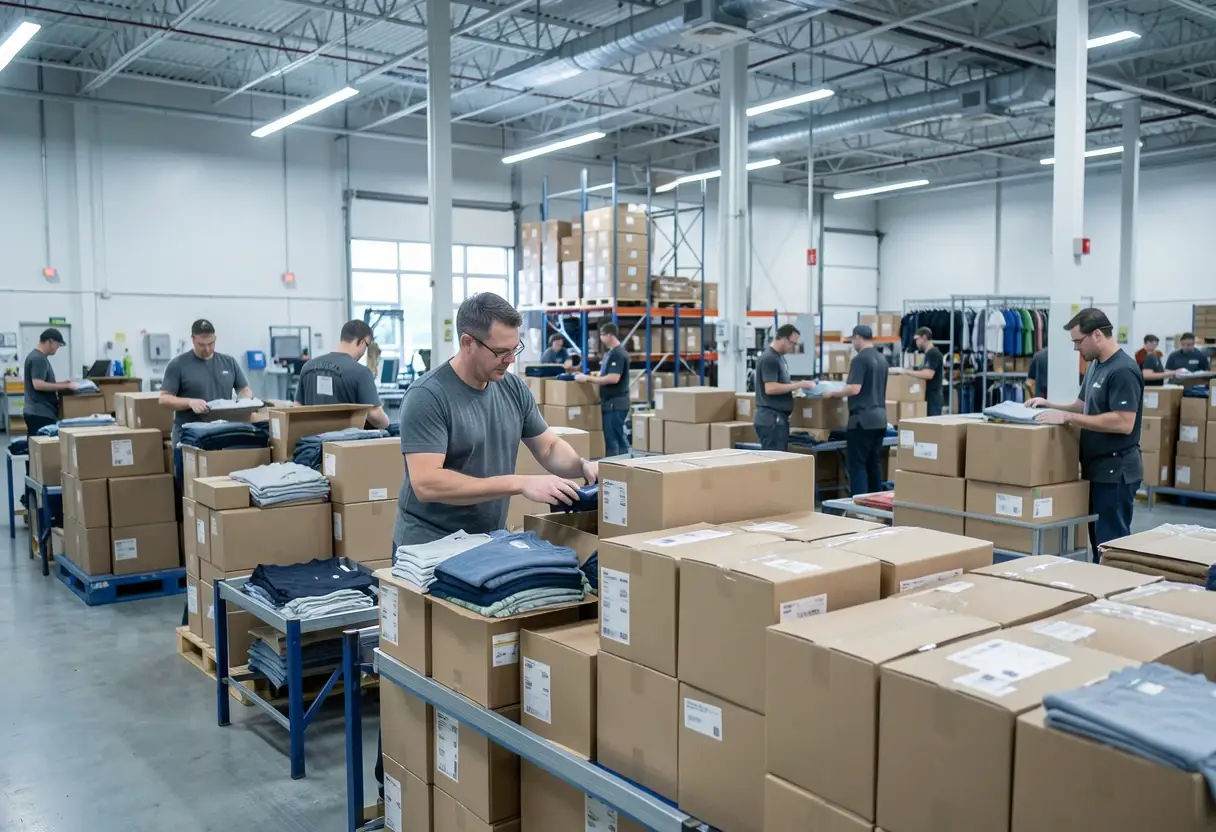
The U.S. is OTAA's largest market, accounting for roughly half its business. The brand began shipping from Cart.com's Longview, Texas facility in February, giving it a domestic base for the first time.
What changed with de minimis gone?
The exemption's end rewrote the landed-cost math for every foreign merchant selling into the U.S. Instead of pushing parcels across the border duty-free, brands now face duties and taxes on low-value imports — costs that either compress gross margin or get passed to customers.
"The end of de minimis changes the economics of serving American customers and makes the decision about where to hold inventory much more consequential," Cart.com founder and CEO Omair Tariq said in the release. "Brands need a U.S. operation sized to proven demand, with room to expand as the business grows."
Tariq's framing is essentially an inventory-turns argument: hold stock where demand is proven, and scale the footprint only as order volume justifies it. That's the model OTAA is following.
How the Texas rollout is staged
OTAA is expanding its U.S. presence in stages rather than moving its whole catalog at once. The specifics:
- The Longview facility stocks about 1,750 styles — one-fifth of OTAA's catalog — concentrated on the bestsellers that drive most U.S. orders.
- The majority of U.S. orders now ship from Texas.
- OTAA plans to add roughly 1,000 more styles by the end of the year, with more to follow as demand builds.
The staged approach caps the working-capital risk of the move. By stocking proven sellers first, OTAA keeps inventory turns high at the new node while avoiding the cost of warehousing slow-moving SKUs (stock-keeping units) on U.S. soil.
The 50% fulfillment-and-delivery saving is the release's headline figure. It's a company assertion rather than an audited number, but even taken at face value it frames the trade-off foreign brands now face: pay duties on cross-border parcels, or pay to hold inventory domestically and win it back on per-order economics.
In plain terms: OTAA bet that warehousing in Texas beats shipping from Australia, and the company says the bet is already paying off per order.
OTAA is not alone
The cost pressure that pushed OTAA stateside is hitting larger retailers too:
- Lululemon expected a $240 million profit hit last year from higher duties plus the loss of de minimis, per a 2025 earnings call.
- DavidsTea reported higher costs and greater complexity shipping orders from Canada into the U.S.
- Aritzia said one-third of its headwinds stemmed from the elimination of de minimis.
For third-party logistics providers like Cart.com, the policy shift is a demand tailwind: every foreign brand that re-shores inventory needs a domestic fulfillment partner. The disclosed evidence here is one brand and one facility, so scale remains unproven — but the economics pushing merchants toward U.S. warehousing are now visible in named retailers' P&Ls.
Expect more mid-sized foreign brands to follow OTAA's staged model as the $800 duty-free loophole stays closed and fulfillment networks compete for their volume.
via Supply Chain Dive (Source)
More from Olivia Hart
Show full bio
Market editor covering companies, deals and strategy in Wholesale and distribution industry coverage for B2B professionals at Distribution Brief.
186 articles