Wholesale ChannelsTX-B971
Metro AG Loses Control of Russian Operations Under Putin Decree
Metro has lost operational control of its Russian wholesale business under a Putin decree. The German cash-and-carry operator will absorb stranded overhead and lose a non-European revenue contributor.
- Scan date
- October 9, 2026
- Handle time
- 3 min
- Ticket
- TX-B971
Packing list
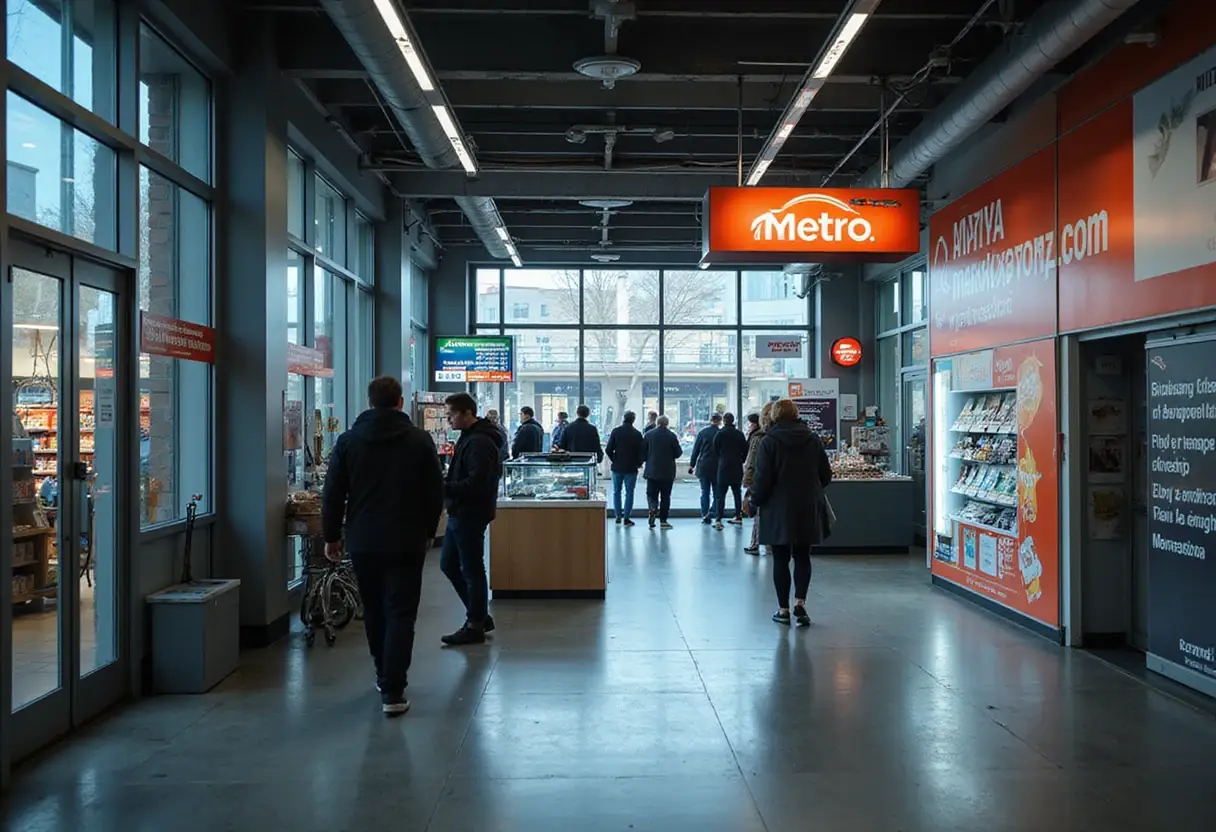
Metro has lost operational control of its Russian business under a Putin decree, per Euronews.
The decree transfers management authority to parties appointed under Russian state authority.
Metro operates as a German cash-and-carry and foodservice wholesaler serving HoReCa and small retailers.
The Russian exit forces the parent to absorb stranded overhead and reset its geographic revenue mix.
The decree follows a pattern of involuntary external management imposed on Western-owned Russian businesses.
Metro, the German cash-and-carry and foodservice wholesaler, has lost operational control of its Russian business following a decree signed by President Vladimir Putin, according to a Euronews report.
The action ends Metro's ability to direct the Russian unit. The mechanism transfers management authority to parties appointed under Russian state authority, converting what had been a stalled exit into an outright separation. Metro retains nominal legal status as a shareholder but no longer controls the Russian unit's cash flow, supplier relationships, or strategic direction.
What does the decree change for Metro's distribution economics?
For a wholesaler built on procurement scale, inventory velocity, and integrated supplier contracts, the loss of an entire national footprint is a structural event, not a one-time accounting entry. Metro's gross margin profile depends on the breadth of its store base and the depth of its assortment: fixed costs in logistics, IT, and category management spread across high transaction volume and tight inventory turns.
Removing an entire country from that equation forces the parent to absorb stranded overhead while losing the revenue base those costs once supported. The Russian stores had operated as a meaningful contributor to Metro's non-European top line, and their loss shifts the group's geographic mix more heavily toward Western Europe and the Asian markets where Metro has invested in expansion.
For the suppliers who sold into Metro Russia's shelves—packaged goods, fresh produce, non-food categories—the decree triggers a renegotiation of terms. Multi-country suppliers now face an entity that answers to different management, with different margin targets and potentially different sourcing decisions.
What does this mean for the Russian wholesale market?
The decree places Metro's Russian stores under external management at a moment when the country's wholesale channel is being reshaped by the exit of Western operators. Local competitors, state-linked distributors, and Russian-owned retail groups are absorbing market share that foreign parents can no longer defend.
The result is a redistribution of channel power: smaller and often less efficient operators take volume that a cash-and-carry specialist once aggregated. For independent restaurants, hotels, and small retailers who relied on Metro for one-stop procurement, the question is whether the new operator maintains assortment, pricing discipline, and credit terms.
External managers typically optimize for short-term revenue and continuity of employment, not the long-term category strategy that drove Metro's value proposition. The efficiency gains that come from scale procurement, private label, and data-driven assortment planning are difficult to replicate under transitional ownership.
What is the regulatory mechanism behind the decree?
The decree follows a pattern of Russian state action against Western-owned businesses, in which temporary external management keeps strategic assets operating when foreign shareholders seek to exit. The legal structure allows the state to appoint managers, redirect profits, and—eventually—transfer ownership through forced sale or nationalization. For shareholders, the practical effect is the loss of meaningful control while nominal title remains on paper.
What comes next for Metro's footprint?
Metro will book the Russian separation as a discontinued operation, with a non-cash impairment charge that reflects the gap between the original investment and recoverable value. The bigger question is what Metro does with the freed-up capital and management attention. The group has been under pressure from investors to improve returns; the Russian exit removes a low-return segment but also removes any future optionality from a market that, under different conditions, could have been a growth engine.
For the broader European wholesale sector, the Metro case marks how geopolitical risk now translates directly into channel disruption. Distribution is built on long-term contracts, supplier relationships, and physical infrastructure—all of which can be compromised by a single decree. Companies with meaningful Russian exposure will continue to price that risk into their cost of capital, and lenders will recalibrate exposure limits accordingly.
Metro's experience suggests that the dividing line between orderly divestment and involuntary separation in Russia has become thin. Wholesalers weighing any future exposure will read the decree as confirmation that exit, once delayed, may no longer be a controllable process.
via Google News: Cash and carry (Source)
More from Olivia Hart
Show full bio
Market editor covering companies, deals and strategy in Wholesale and distribution industry coverage for B2B professionals at Distribution Brief.
137 articles