Foodservice DistributionTX-95DA
Driscoll Foods Buys Mid-Hudson Logistics Center for Foodservice Distribution
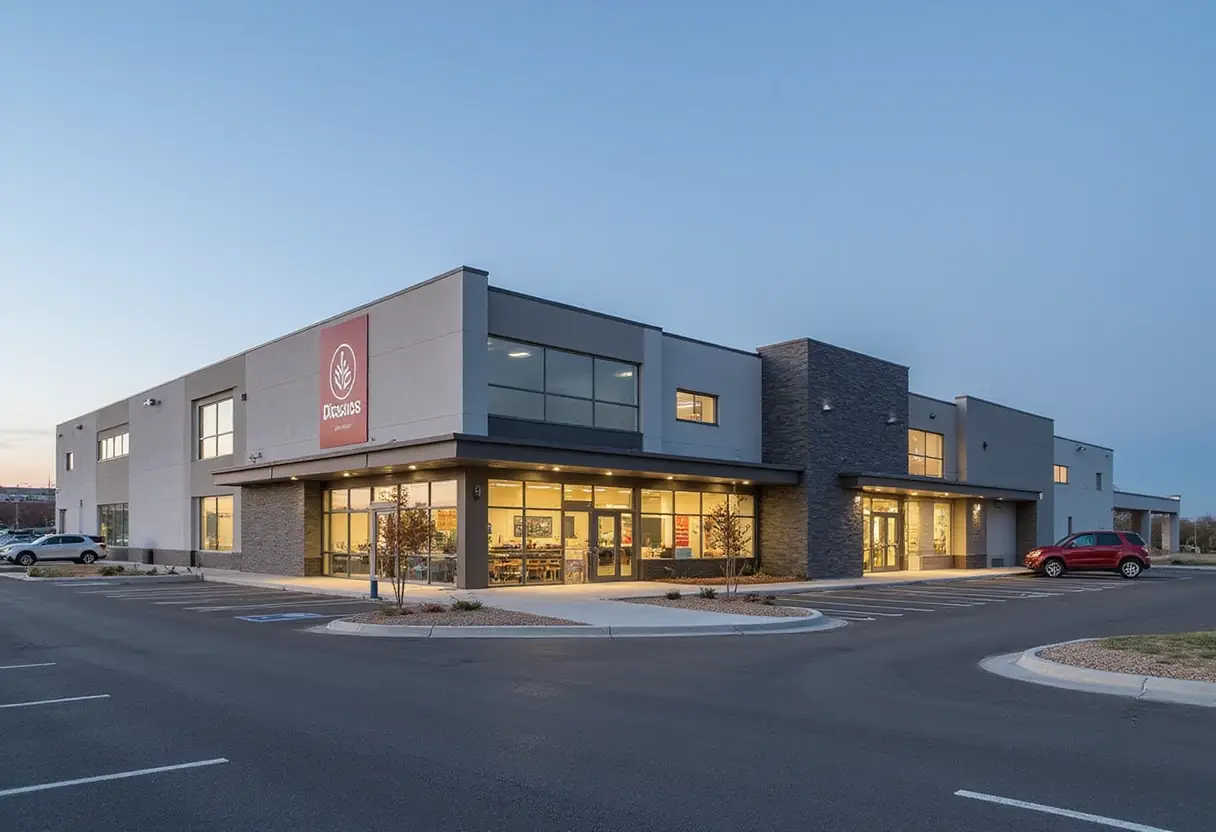
Driscoll Foods has acquired the Mid-Hudson Logistics Center for foodservice distribution, though the deal price, building size, prior owner, and closing date remain undisclosed. The Hudson Valley site adds geographic redundancy and balance-sheet capacity to the Northeast broadlin
- Scan date
- October 10, 2026
- Handle time
- 3 min
- Ticket
- TX-95DA
Packing list
Driscoll Foods has acquired the Mid-Hudson Logistics Center for foodservice distribution, per Perishable News.
Purchase price, square footage, prior owner, and closing date were not disclosed in the announcement.
The site sits in the Hudson Valley corridor between the New York City metro and upstate markets with access to I-84 and the New York State Thruway.
From the Mid-Hudson position, delivery windows to Manhattan-area operators run roughly two hours, supporting next-day foodservice delivery.
Private foodservice distributors typically withhold facility transaction terms to limit competitor benchmarking on throughput and cost-per-case shipped.
Driscoll Foods has acquired the Mid-Hudson Logistics Center for foodservice distribution operations, according to a Perishable News headline. The deal gives the distributor a dedicated property in the Hudson Valley, though the parties have not disclosed the purchase price, square footage, prior owner, or closing date.
That absence of disclosure is itself informative. Private foodservice operators serving the Northeast's restaurant and institutional trade typically keep facility transactions quiet because disclosed square-footage and dollar figures feed directly into competitor benchmarking on throughput per square foot and cost-per-case shipped.
What the buyer gains
Foodservice distributors acquire rather than lease when they want tighter control over build-out, dock count, and temperature zoning. A logistics center that fits those specs costs less over a ten-year horizon than a triple-net lease, and it converts a fixed lease cost into a balance-sheet asset that backs working-capital lines. Driscoll Foods, a long-running broadline operator in the New York metro foodservice trade, has historically combined owned facilities with leased nodes; adding another owned property extends that mix in a corridor where lease rates have moved upward.
Why Mid-Hudson geography matters
The Mid-Hudson designation places the property in the corridor between the New York City metro and upstate markets, with access to I-84 and the New York State Thruway. From that position, a foodservice warehouse can reach Manhattan-area operators in roughly two hours and Albany-area accounts inside three, a window that supports next-day delivery to restaurant and institutional kitchens across southern New York, northern New Jersey, and western Connecticut.
For a broadline distributor, geography drives site selection before real estate listings do. A facility already configured to warehouse standards — ceiling clearance, multi-temperature zones, trailer staging — gets repurposed rather than razed, because retooling a cold-storage or ambient warehouse from another use imposes six- to twelve-month build-out delays that a competitor can exploit.
Channel economics behind the move
A regional hub shortens the leg between intake and delivery. For a restaurant operator or institutional buyer, that compresses order lead times and reduces safety-stock inventory held at the unit level. For Driscoll's existing customer book, the new site creates redundancy: a weather closure at one warehouse can be absorbed by the Mid-Hudson node without forcing a multi-day delay on perishable SKUs.
The harder question is whether the same property becomes a base for new account acquisition. Hudson Valley foodservice buying is fragmented, with broadline distributors competing against specialty cheese, seafood, and produce houses on overlapping categories. Larger capacity footprints typically pull gross margin through volume rebates from suppliers, but only when the operator converts existing route density into incremental stops per route — a margin lever that requires careful re-segmentation of the customer file rather than a facility change alone.
The acquisition does not, by itself, change Driscoll's reported inventory turns. Those move with sku mix, supplier consolidation, and demand forecasting accuracy, not with bricks-and-mortar. What a property change does move is the cost-per-case-out figure that gross-margin-per-stop analysis depends on, since dock-to-route time and reroof-versus-rebuild variance both flow through that line.
What remains undisclosed and what to watch
The Perishable News headline carries five unknowns:
- the purchase price
- the building's square footage and dock count
- the prior owner of record
- whether any third-party logistics tenants remain in place
- the date the deal closed
Until those fields surface in a recorded deed transfer or a company statement, the most that can be said is that Driscoll Foods has executed an acquisition of a logistics property branded Mid-Hudson and intends to operate it for foodservice distribution. Watch for a follow-on announcement of route schedules, headcount additions, or supplier onboarding at the site — that is the clearest signal that the facility has moved from purchase to live operation in the channel.
via Google News: Foodservice distribution (Source)
More from James Calloway
Show full bio
Senior reporter covering regulation, policy and their impact on Wholesale and distribution industry coverage for B2B professionals at Distribution Brief.
141 articles