Industrial & MRO SupplyTX-0620
Bridgeline Deepens Global Industrial Partnership via Hybrid Upgrade
Bridgeline has signed a multi-year services agreement with an unnamed global industrial supplier, covering a hybrid infrastructure upgrade. The Globe and Mail carried the headline without naming the customer.
- Scan date
- October 9, 2026
- Handle time
- 3 min
- Ticket
- TX-0620
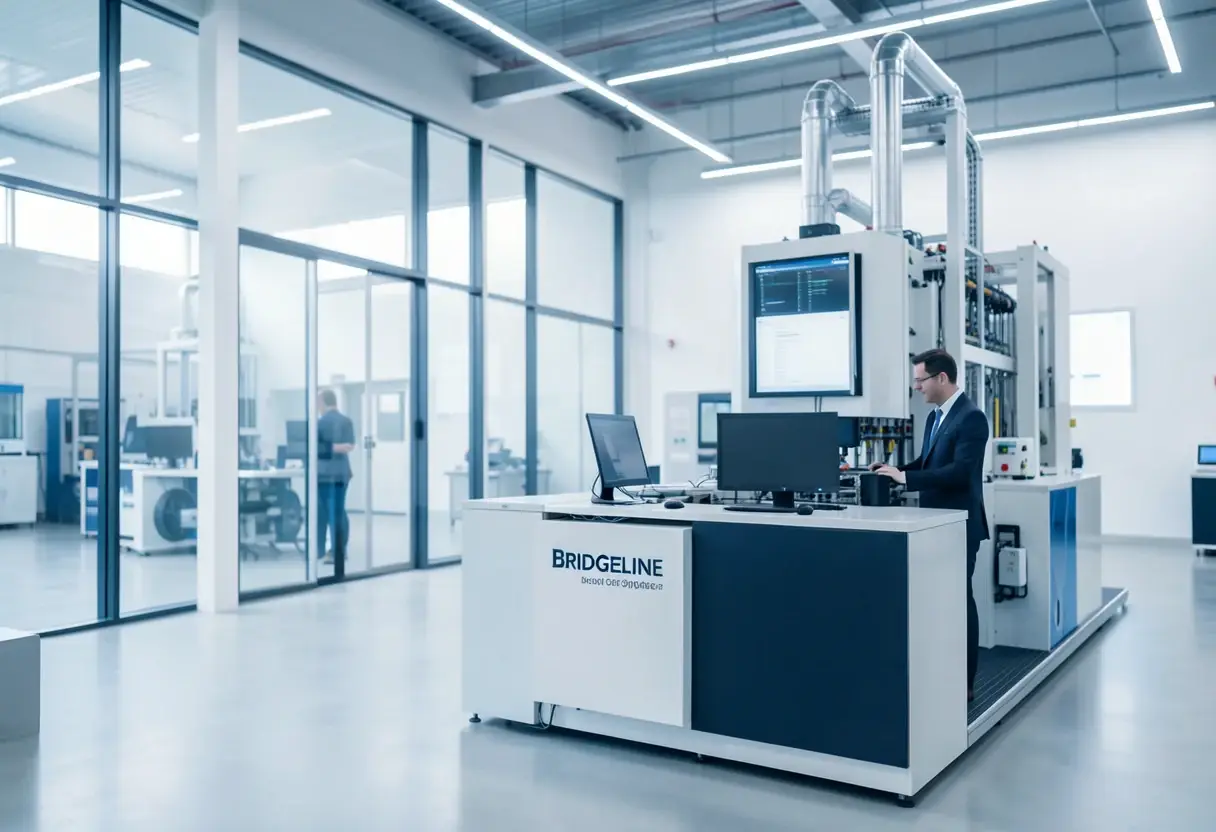
Packing list
Bridgeline announced a multi-year services agreement with a global industrial supplier.
The deal covers a hybrid infrastructure upgrade extending an existing relationship.
The Globe and Mail carried the headline; the customer was not named.
Contract value and term length were not disclosed in the announcement.
The deal's contribution to Bridgeline's services backlog remains undisclosed and will surface only in a future regulatory filing.
Bridgeline announced a multi-year services agreement with an unnamed global industrial supplier, extending an existing relationship through a hybrid infrastructure upgrade. The Globe and Mail carried the headline. The announcement did not name the customer, disclose the contract value, or specify the term length.
Who is the customer?
The supplier appears only as "global" and "industrial." No specific company, geography, or vertical specialization — MRO, OEM components, process equipment, fluid power, or electrical — appears in the announcement. Distribution-channel IT news regularly features this level of anonymity; buyers often decline identification to avoid signaling procurement strategy to competitors. The omission leaves outside observers unable to benchmark the relationship against named accounts or size it within any specific industrial vertical.
What does "hybrid infrastructure upgrade" cover?
The phrase points to a deployment that combines cloud-hosted services with on-premises components. Industrial buyers typically require that configuration because product catalogs carry regulatory documentation, country-of-origin codes, hazmat classifications, and machine-readable attributes that must remain integrated with internal ERP and product information management systems. A hybrid upgrade in this context typically means adding capacity or new features to the hosted front-end layer while preserving the existing on-premises connections, rather than a full cloud migration of the customer's stack.
What does the multi-year term imply for revenue?
Vendors recognize enterprise software agreements of this type ratably over the contract term, which anchors a recurring services revenue line for the duration of the agreement. An extension of an existing customer also implies a transition from initial build-out work to maintenance and enhancement — a phase that tends to compress services margin relative to the original implementation while raising the gross margin contribution of the recurring license component. The company has not disclosed whether the renewal includes new licenses, expanded user counts, or additional geographies, so the size of the uplift relative to the prior contract remains undisclosed.
What does "deepening commitment" actually mean?
For a software vendor, a renewal of an existing account — as the headline frames it — tests a different set of variables than a new logo. New customer wins demonstrate outbound sales effectiveness and pricing power with first-time buyers. Renewals of existing accounts test pricing leverage, implementation quality, and the vendor's ability to expand scope inside an established footprint. The phrase "deepens commitment" suggests scope expansion rather than contract continuation — additional modules, additional users, additional geographies, or additional services intensity — though none of those specifics appear in the announcement. For Bridgeline, scope expansion within an existing relationship typically translates to higher annual contract value without additional sales-cycle cost, the most efficient revenue path a SaaS vendor has.
What does it signal for distribution channel economics?
Industrial suppliers sell through a dual-channel structure:
- Legacy punchout channel — large procurement buyers transact through EDI and punchout catalogs attached to e-procurement platforms. Suppliers typically remit a percentage of purchase or per-transaction fee to the procurement platform.
- Direct digital channel — smaller or mid-market buyers expect modern search, personalization, and self-service on the supplier's public portal.
A hybrid infrastructure upgrade preserves the punchout integrations on the legacy side while modernizing the direct portal. The economics protect margin on the legacy channel and reduce friction on the direct channel at the same time, the configuration most industrial distributors have spent the last three years converging toward.
Bridgeline has not disclosed the deal's contribution to services backlog or remaining performance obligations, and the figure will surface only in a future regulatory filing.
via Google News: Industrial distribution (Source)
More from Olivia Hart
Show full bio
Market editor covering companies, deals and strategy in Wholesale and distribution industry coverage for B2B professionals at Distribution Brief.
137 articles